Recent data shows a clear boost in demand for low-rise new homes across the GTA, following the introduction of the HST rebate program. As a broker committed to transparency and putting my clients first, I’ve been closely watching this trend. Builders have responded to the renewed interest by steadily introducing more low-rise options, which has helped keep the market balanced and prevent rapid price increases. Meanwhile, the condo sector hasn’t been able to fully benefit, with construction rules making it harder for that segment to participate. It’s worth noting that while gross prices remain unchanged, eligible buyers can take advantage of the rebate for additional savings—making homeownership more achievable and supporting new buyers in our region. Many in our industry recognize that initiatives like this can contribute to a stronger economic outlook and protect local jobs. As always, I’m here to guide you through the evolving market with honesty and integrity, so you can make informed real estate decisions backed by experience and dedication.
Category: Latest Posts
-
Average price of a condo dips below $500K in Mississauga
In August, Mississauga’s real estate market reflected some notable shifts: sales were down 13%, and new listings dropped by 19.2%. The average home price settled at $898,510, with detached homes averaging $1,275,221 and condos dipping just below $500,000 to $495,052. This adjustment points to a balanced market—an environment where buyers and sellers both have opportunities. Having guided clients through many market cycles, I know the importance of clarity and informed decision-making. Whether you’re considering entering the market or simply keeping an eye on trends, my commitment is to provide the transparent, ethical guidance you deserve. My goal is always to ensure your real estate decisions are made with confidence and backed by experience.
Continue to full article -
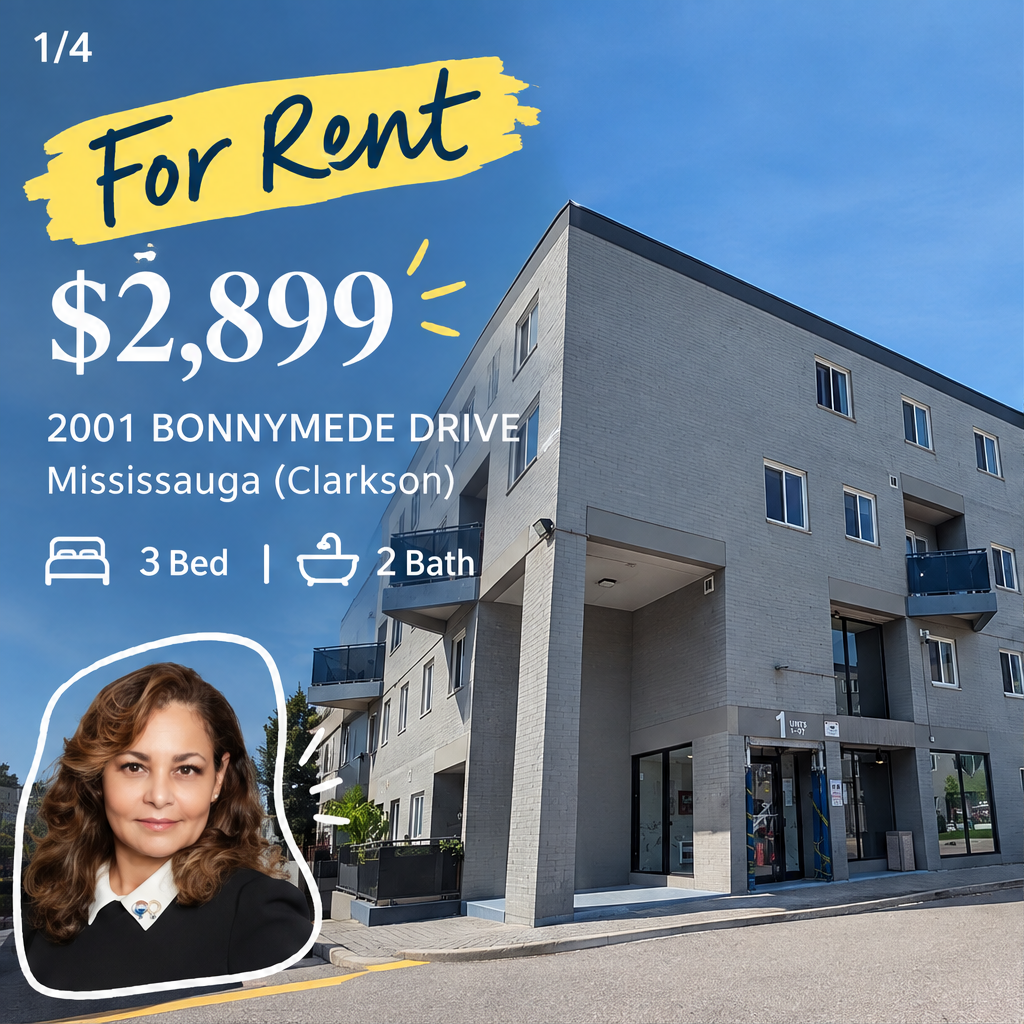
A Clarkson Rental That Checks Every Box
Prime Clarkson Location: Enjoy convenient access to transit, parks, schools, shopping, and everyday amenities from 2001 Bonnymede Drive.
Room to Settle In: This 3-bedroom, 2-bathroom house offers comfortable space for families, professionals, or anyone ready to upgrade.
Move-In Opportunity: Priced at $2,899, this inviting home could be the ideal next chapter in Mississauga living.
Ready to see it in person? Send a message today to schedule your private viewing of 2001 Bonnymede Drive before it’s gone.Continue to full article -
Canada’s Residential Zoning Is Local
For Canada homeowners, zoning shapes property changes like additions, extra living space, accessory structures, or new uses, so checking current local rules comes first.
A property labeled residential may still face detailed limits on height, setbacks, lot coverage, parking, building location, and dwelling count at that address.
Before buying or renovating in Canada, confirm the full zoning designation, permitted uses, and any property-specific exceptions instead of relying on old listings.
Even when a planned use is allowed, projects can still miss standards for setbacks, height, driveway size, accessory structures, or landscaped open space.
Rules can change over time, and neighboring properties may follow different exceptions, approvals, lot conditions, or development standards, making current verification essential. -
Canada’s Rental Affordability Gap
Canada’s avg. rent fell ↓~2% yearly to $2.1K, yet households still spent ~28% of income on housing, showing lower prices alone didn't restore affordability.
Vancouver rents fell ↓~6% and Toronto ↓~5%, yet renters there spent less income on housing than the national norm because household earnings remained stronger.
The bigger pressure point showed up in several secondary markets, where incomes fell ↓~6% to ↓~22% and rent burdens stayed above the national avg.
Risk signals also intensified: national debt collections rose ↑~18% yearly, showing financial strain persisted for renters across Canada even while asking rents moved lower.
Shared living helped many households keep pace, and experts said affordability assessments now need rent, income, credit, employment, and other financial signals together. -
GTA Micro Condos Lead Depreciation
GTA avg. home selling price was $993K in Mid-Q3 2026, down ~3% yearly, showing the broader market continued easing overall for buyers.
GTA condo apartments averaged $618K in Mid-Q3 2026, below the prior year's level, while the smallest units posted the market's sharpest depreciation.
Micro condos, under 500 sq-ft, were toughest to move in the GTA, with limited end-user appeal and buyers gaining access to larger options.
In Early-Q3, condos sold below list in ~98% of GTA neighbourhoods with at least five sales, giving active buyers unusually broad negotiating room.
Single-family homes also saw underbidding across ~92% of GTA neighbourhoods, but condos were more sensitive as investor demand faded and more investor-friendly units lingered. -
Canada’s Condo Market Falls 6% Yearly
Canada's national home values fell 3% yearly in Mid-Q3 as trade tensions and a broader condo slide kept buyer confidence restrained across the country.
Multi-family homes saw biggest adjustment in Mid-Q3, with row and townhouse values ↓7% yearly and condo prices ↓6%, while detached and semi-detached homes were steadier.
Southern Ontario remained weakest, with Toronto and Hamilton each ↓7% yearly in Mid-Q3, while Vancouver and Victoria posted narrower 3% declines than earlier in 2026.
Calgary moved back to flat in Mid-Q3 after a slight yearly dip in Early-Q3, while Quebec City ↑11% and Montreal and Regina ↑6%.
National averages increasingly obscure local conditions, making purchase location and property type more important than ever for clients navigating Canada's fragmented housing market. -
Property Insurance: Coverage Explained for Homeowners and Renters
Property insurance covers financial protection for property owners and renters against damage, theft, and liability claims. It includes homeowners, renters, flood, and earthquake insurance. Policies typically cover damage from fire, weather, vandalism, and theft but exclude floods, earthquakes, mold, and wear-and-tear. Coverage types include replacement cost, actual cash value, and extended replacement cost. Mortgage lenders often require property insurance.
Continue to full article -
Boost Your Credit Before You Apply
Preparing to buy a home in Mississauga starts well before you submit a mortgage application. A stronger credit profile can improve your borrowing options and help you approach your budget with confidence. Begin by checking both credit reports for inaccuracies, then reduce credit card balances and keep utilization low. Protect your payment history with automatic reminders, avoid unnecessary hard inquiries, and think carefully before closing older accounts. Once your finances are organized, speak with a qualified mortgage professional and a local Mississauga real estate agent to understand your options and plan your search.
Continue to full article